

Cooking classes are amongst the most popular activities for tourists visiting Phuket. At the Pavilions Phuket you can enjoy a variety of courses which focus on the four most important regional cuisines of the kingdom
By: Hanna Williams
The Pavilions Phuket offers an immersive Thai Cooking Class that delves into Thailand’s rich culinary heritage. Participants can select from four authentic menus, each representing significant periods in Thai history: Sukhothai, Ayutthaya, Rattanakosin or Southern Thai.
History shows that the earliest food culture appeared between 1238 and 1438 during the Sukhothai Kingdom. Dishes from this period often highlight the natural sweetness of palm sugar and the tanginess of tamarind and lime.
When the Ayutthaya Kingdom came into being between 1350 and 1767, Thailand was an international trading hub. During this period cooking was heavily influenced by imported ingredients from Europe such as: chillies, coriander and tomatoes.
During the Rattanakosin period that followed, from the 1780s, cooking techniques were enhanced by the fine dining offered at the royal court, with much attention paid to food presentation, particularly with intricate fruit and vegetable carving.
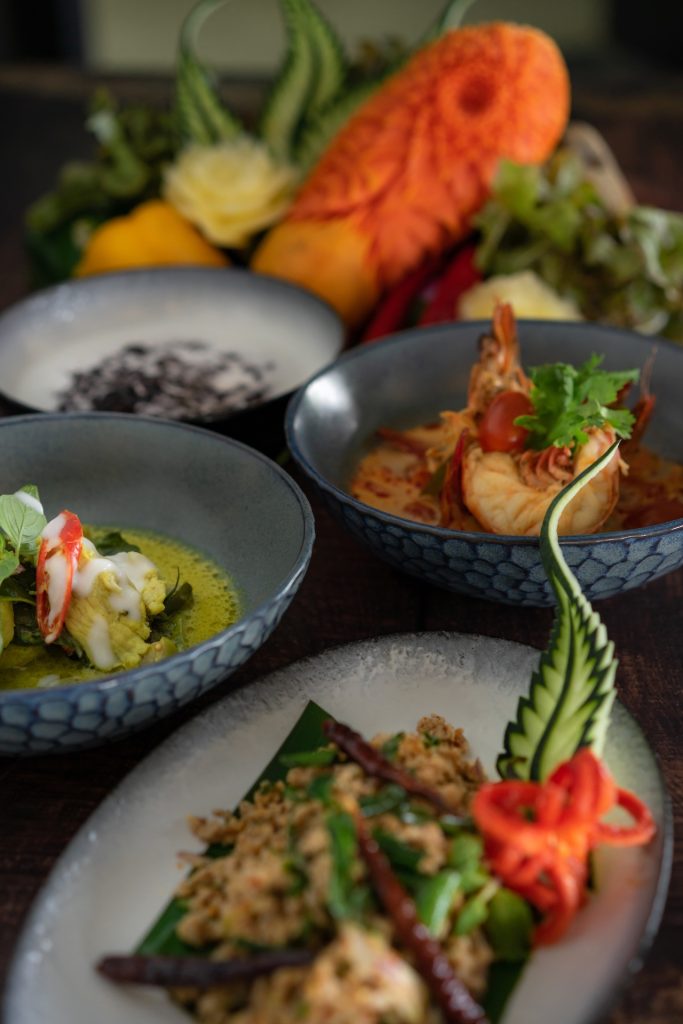
I opted for the Southern Thai cooking course, not least because Phuket is located in southern Thailand. Here, because of its proximity to predominantly muslim Malaysia, menus were notable for bold and aromatic flavours, reflecting the region’s cultural influences. Dishes from this region often feature fresh seafood, vibrant spices, and ingredients like turmeric and coconut milk.
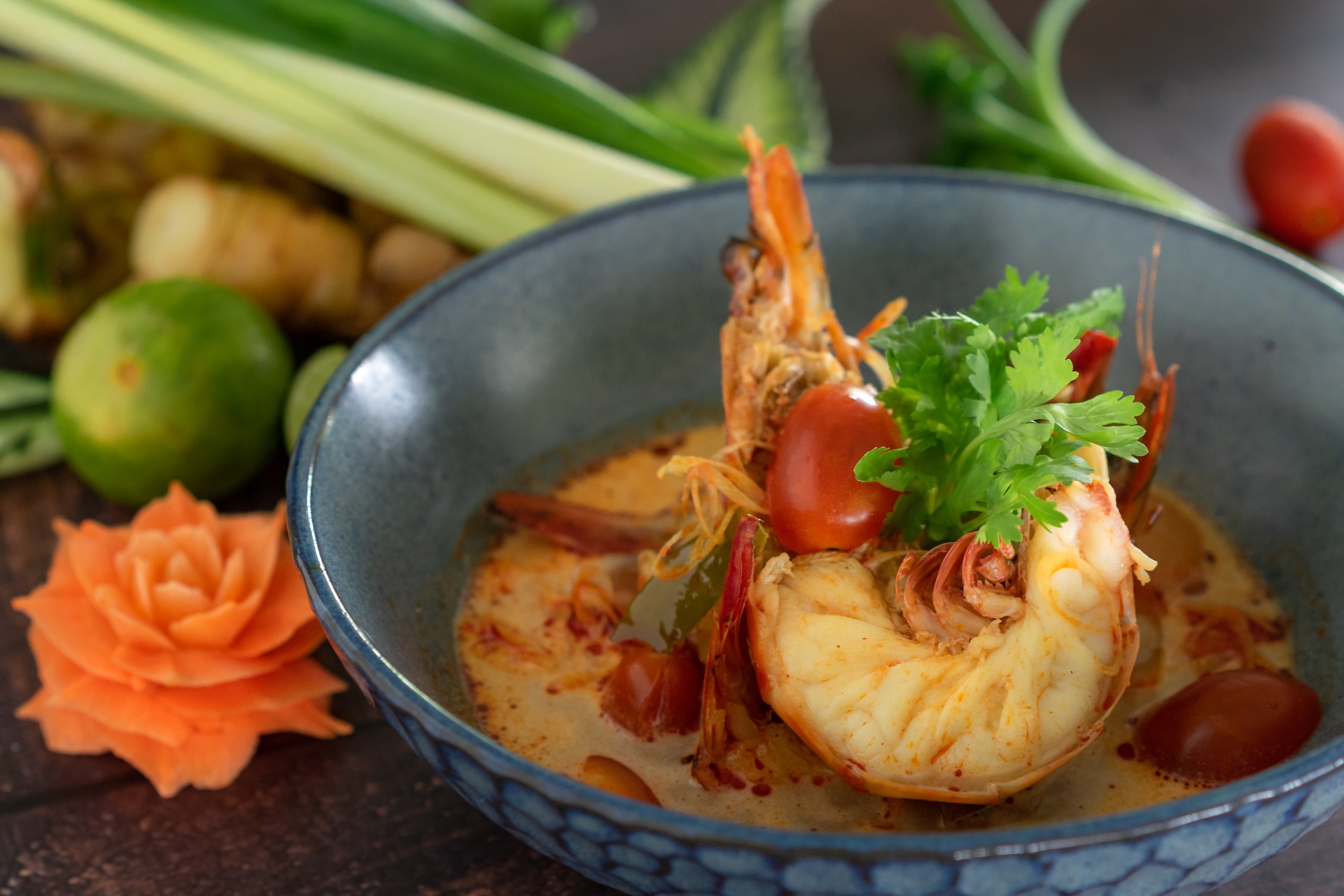
For example, the spicy clear seafood soup Tom Yum Talay, features lemongrass, kaffir lime leaf, galangal and lime juice. The dish has been adapted in recent years for the modern tourist with the inclusion of milk, giving it a creamier consistency.
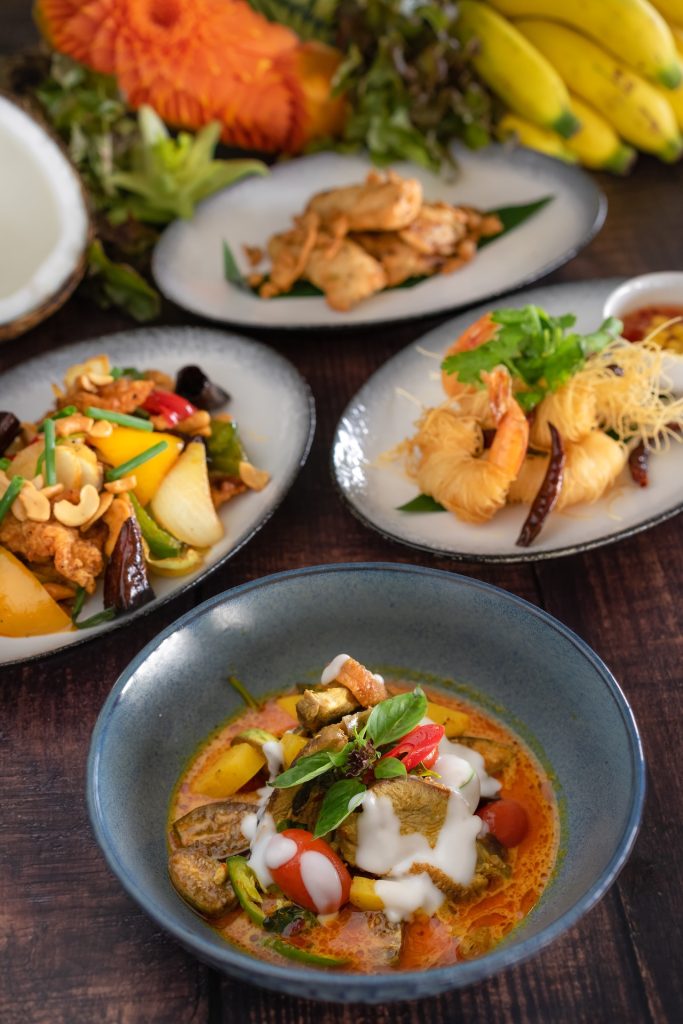
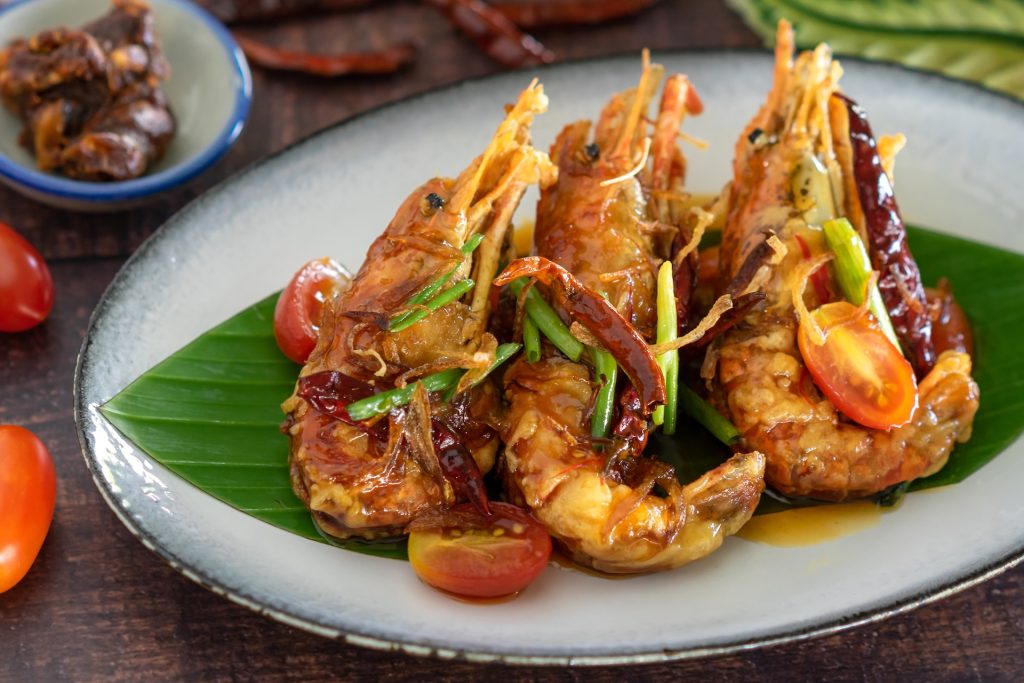
We also prepared Goong Pad Nam Makham (a tiger prawn tamarind dish) and Pad Kra Pad Grapao Gai Mee Krob (stir-fried chicken mince with holy basil). The course concluded with preparing Thailand’s most ubiquitous dessert, Kae New Ma Muang, better known as ‘Mango Sticky Rice’.
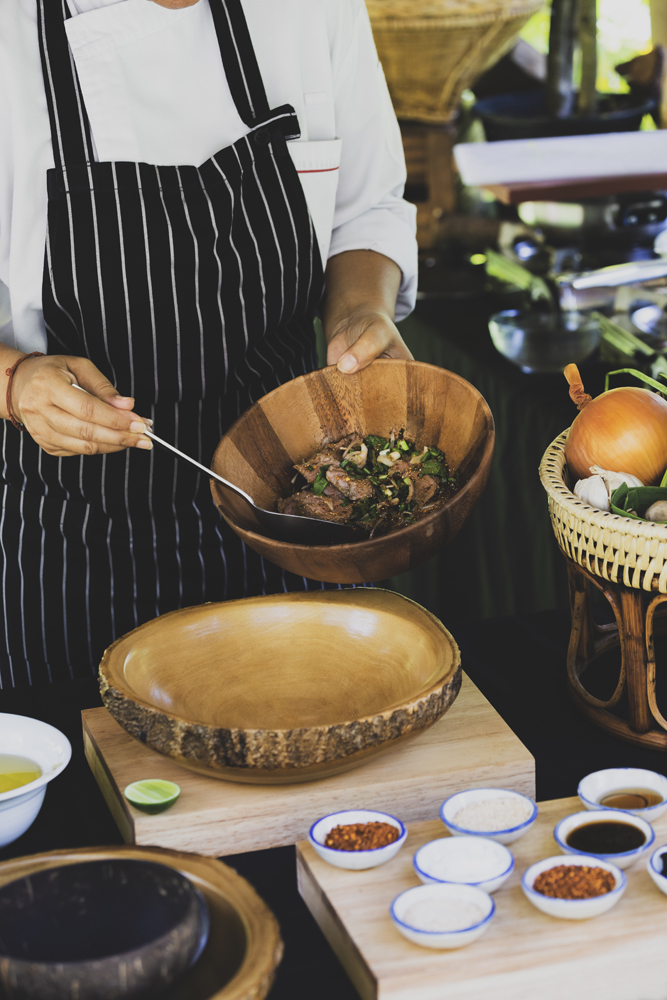
Guided by the resort’s culinary team, this was a hands-on experience where we learned new preparation skills, gained insights into the history and techniques that define Southern Thai cooking; we also got to take home the fruits of our newly acquired culinary expertise.